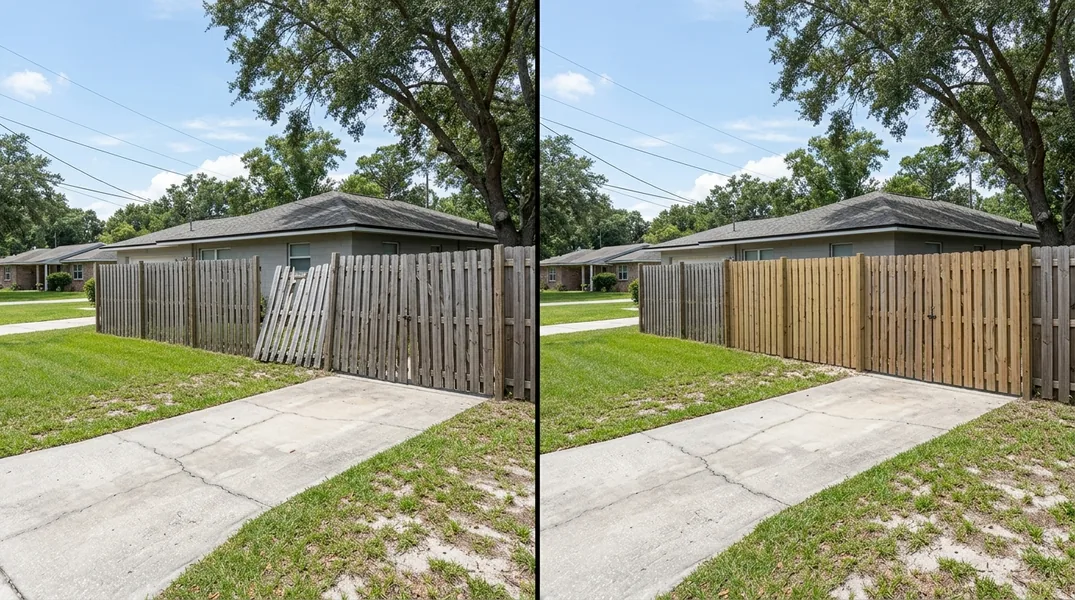
Understanding Jacksonville's Unique Soil Challenge
If you've ever driven a fence post into the ground in Jacksonville, you know the feeling: the sandy soil gives way too easily. Unlike homeowners in regions with clay or loam, Jacksonville residents face a specific engineering problem. Our area's predominantly sandy composition drains water quickly, provides minimal lateral support, and shifts with seasonal moisture changes and heavy rainfall. This isn't a minor inconvenience. It's the difference between a fence that stands straight for 15 years and one that leans, wobbles, or fails within five.
The solution isn't to use thicker posts or stronger materials. Rather, it's to engineer the footing properly. When contractors talk about putting the work on the footing instead of the post, they mean that the real investment in fence longevity happens below ground level. A properly designed footing compensates for sandy soil's weakness by anchoring the post deep enough and wide enough to resist movement. This principle applies whether you're installing Wood & Privacy Fence Installation, vinyl, or metal fencing. The footing is your insurance policy against the ground itself.
Do I Need a Permit for a Fence in Jacksonville?
Yes, you do need a permit for most fence installations in Jacksonville. The City of Jacksonville requires a fence permit before you begin construction, and this requirement exists for good reason. Permits ensure that your fence meets local building codes, respects property lines, complies with setback requirements, and doesn't interfere with utilities. Skipping the permit process might save money upfront, but it exposes you to fines, orders to remove the fence, and potential liability issues if someone is injured on your property.
The permit process in Jacksonville typically involves submitting a site plan, proof of property ownership, and details about the fence's materials and height. The city's Building and Zoning Department reviews these documents to ensure compliance. If your property is in an HOA community, you'll also need HOA approval before the city issues a permit. This dual approval requirement can extend the timeline, but it protects both your investment and your neighborhood's character. Jacksonville Fence Pros handles the permit coordination for our clients, which streamlines the entire process and ensures nothing falls through the cracks.
Fence Height Regulations and HOA Approved Fence Standards
Jacksonville's fence height regulations are straightforward for residential properties: front-yard fences are typically limited to four feet, while side and rear fences can reach six feet. However, these rules aren't universal across every neighborhood. If your property falls within an HOA community, the association's covenants may impose stricter limitations. Some HOAs require front fences to be no more than three feet tall, or they may specify materials, colors, and styles that are considered acceptable. Before you commit to any fence design, verify both the city's requirements and your HOA's guidelines.
An HOA approved fence isn't just about height. Homeowner associations often have detailed architectural guidelines that govern everything from wood stain colors to post spacing to whether vinyl or metal fencing is permitted at all. Some HOAs prohibit certain materials entirely, while others maintain approved vendor lists. When you're planning your fence project, request your HOA's architectural guidelines in writing, and consider working with a contractor like Jacksonville Fence Pros who understands these local requirements and can design a fence that satisfies both city code and association rules. This upfront coordination prevents costly rework or removal orders later.
Fence Permit Cost in Jacksonville: What to Budget
The fence permit cost in Jacksonville varies depending on the scope of your project. City permits typically range from $50 to $150 for a standard residential fence installation, though larger or more complex projects may cost more. This fee covers the city's review, inspection, and administrative processing. It's a modest expense compared to the cost of the fence itself, but it's a necessary part of the legal process. Some homeowners are tempted to skip the permit to avoid this cost, but the risk isn't worth the savings. A city inspector can stop your project at any stage, and you could be ordered to remove a completed fence if it was installed without proper permits.
Beyond the permit fee itself, budget for any professional services needed to prepare the application. If you're working with Jacksonville Fence Pros, we include permit coordination as part of our service for Wood & Privacy Fence Installation and other fence types. Our team handles the paperwork, submits the application, and communicates with the city on your behalf. This service ensures your permit is processed smoothly and your project stays on schedule. For a detailed breakdown of what your specific project will cost, including permits and materials, contact us at (904) 643-6174 or request a free estimate through our website.
Why Deep Footings Matter in Sandy Soil
In sandy soil, a shallow footing is a recipe for failure. The frost line in Jacksonville is typically 12 inches, but that's just the minimum. For sandy soil conditions, we recommend footings that extend 24 to 36 inches deep, depending on the fence height and local conditions. At that depth, you're anchoring the post below the layer of soil that shifts seasonally, which means your fence remains stable year-round. The footing should also be wider than the post itself, typically 8 to 12 inches in diameter, to distribute the post's weight and resist lateral pressure from wind or soil movement.
The material used in the footing also matters. Concrete is the standard, but the concrete must be properly mixed and cured to withstand Jacksonville's humid climate and occasional freeze-thaw cycles. Some contractors use a post-and-gravel method, which is faster but less reliable in sandy soil. When you're evaluating contractors for your Wood & Privacy Fence Installation or any other fence type, ask specifically about their footing specifications. A contractor who understands sandy soil engineering will describe their footing depth, width, and concrete specifications without hesitation. This is where the real quality of your fence is determined, even if it's invisible once the project is complete.
Getting Started: Permits, Planning, and Professional Installation
The path to a successful fence installation in Jacksonville starts with planning. Before you order materials or hire a contractor, verify your property lines, check the city's fence regulations, confirm your HOA's requirements if applicable, and understand the permit process. This groundwork takes a few days but prevents expensive mistakes. Once you have clarity on the rules, you're ready to move forward with confidence. If you're in Jacksonville or nearby areas like Orange Park or Fleming Island, consider working with a local contractor who knows the soil conditions, the permit requirements, and the local standards inside and out.
Jacksonville Fence Pros specializes in fence installations that stand up to our region's unique challenges. Whether you're interested in Wood & Privacy Fence Installation, Vinyl & PVC Fence Installation, Chain Link Fence Installation, or Aluminum & Ornamental Iron Fencing, we handle the entire process from permit coordination to final inspection. Our team understands sandy soil, knows the local codes, and builds fences engineered to last. Contact us today at (904) 643-6174 or visit our website to request a free estimate and learn how we can help you build a fence that's both compliant and built to endure.
Looking for a professional tree service in Jacksonville? Jacksonville Fence Pros responds fast for all your fence needs.
Get a Free Quote